


Build Succession Plans for Critical Roles


Critical Role Visibility
Identify the roles that matter to your organisation’s future and manage succession plans through a shared framework.

Suitability-Based Candidate Recommendations
Compare candidates using scored, ranked and explainable recommendations based on criteria specific to your organisation.

Insights That Lead to Development Plans
Transfer candidate development areas into individual development plans and support readiness for critical roles.
Support Business Continuity with Talent Insights
Succession planning gives HR teams early visibility of employees who could prepare for critical roles. Sorwe brings role requirements, candidate evaluation criteria and development needs into one planning approach, supporting more consistent decisions across HR and management teams.
Manage succession planning as an ongoing talent-management practice connected to employee development and career planning, rather than an exercise limited to filling vacant positions.
Strengthen Decisions with Suitability-Based Candidate Recommendations
Define the employees to be considered and the suitability criteria for each critical role. Sorwe scores and ranks candidates who meet those criteria, presenting the results for review by HR teams and managers.
See more than a candidate’s score. Review where each person shows a strong match and which development needs remain. Make the final succession decision using your organisational priorities and management assessments alongside these insights.
Scored candidate recommendations: Review suitable candidates in a comparative and prioritised view.
Explainable results: Understand why a candidate is recommended by reviewing strong matches and development areas.
HR-controlled decisions: Use system recommendations as decision support while HR teams and relevant managers retain the final decision.

Evaluate Candidates Against Critical-Role Requirements
Set suitability conditions and evaluation priorities for each critical role according to your organisation’s needs. Bring together multiple talent signals rather than relying on a single data point.
Performance Indicators
Consider employee performance results and goal evaluations alongside the expectations of the role.
Potential and 9-Box Results
Use potential visibility and 9-box assessments as signals that support candidate suitability.
Competency and Skill Fit
Compare candidate competencies, skill fit and development areas with the requirements of the critical role.
Risk and Suitability Signals
Include organisational risk and suitability signals that affect candidate evaluation in the decision process.

See Succession Coverage Across Critical Roles
See which critical roles have a sufficient number of suitable candidates and where the talent pool needs to be strengthened. Track coverage over time to keep organisational readiness visible.
Identify recruitment, employee-development and career-planning priorities earlier for roles with too few candidates or limited readiness.

Turn Successor Development Areas into Action Plans
Naming a successor candidate is not the end of the process. Make the competency and skill areas affecting role readiness visible, then transfer selected development needs into an individual development plan.
Support role readiness with clear development goals and actions, turning the succession plan into a practical career journey.
Explore Employee Development PlansBring 9-Box Results into Succession Decisions
Evaluate performance and potential together with the 9-box grid to make talent segments and development priorities visible.
Rather than using those results as a standalone selection decision, combine them with performance, competencies, skill fit and other role criteria to support succession planning.
Explore the 9-Box Grid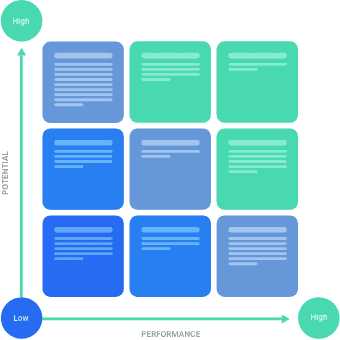
Make Succession Planning Part of Talent Management
Connect insights from performance evaluation, 360-degree feedback, the 9-box grid, employee development plans and HR analytics with succession and career planning.
With Sorwe’s connected talent-management approach, manage employee development, critical-role readiness and organisational planning as complementary processes.
Explore Talent ManagementFrequently Asked Questions About Succession and Career Planning
What is succession and career planning?
How does Sorwe recommend successor candidates?
Can evaluation criteria be tailored to the organisation?
Which information can be used to evaluate candidates?
How does the 9-box grid support succession planning?
Can development plans be created for successor candidates?
Build Future-Ready Succession Plans for Critical Roles
See how Sorwe brings succession and career planning into a connected talent-management approach.
Book a Demo