


What Is OKR? Tips to Adopt the OKR Method
 Sorwe
Sorwe


OKR (Objective and Key Results) is a goal-setting framework that helps companies, teams, and individuals define clear objectives and track measurable results to achieve fast, focused growth.
The History of OKR
OKR's history goes back to Peter Drucker. The model has become the formula of success for many companies with Andrew Grove, who transformed Peter Drucker's MBO method into OKR at Intel, together with John Doerr, who was interning at that time.
Doerr conveys his thoughts on the period when he invested $11.8 million in Google to take a 12% ownership stake in his book called “Measure What Matters” as such: “I took my biggest gamble. I committed myself, both in financial and emotional terms, to help the company become successful.”
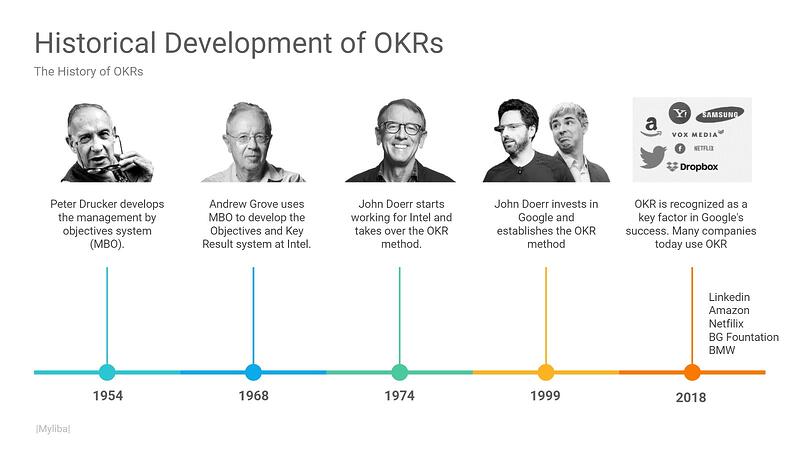
This method, which was presented to the Google team when they were actually just 30 people, is still being used on Google’s more than 118,000 employees and other global companies to shape performance processes.
A tiny remark in John Doerr’s own words: “OKR is a goal-setting protocol for companies, teams, and individuals which grounds on collaborative work. However, OKRs are not magic wands. They cannot substitute for good judgment, strong leadership or creative corporate culture. If these basics exist, OKRs can push you over the top.”
What Is OKR?
OKR, Objective and Key Results, first applied at Google, constitutes the basis for today’s most efficient performance management processes. The greatest strength of OKR is its ability to make employees focus on an objective regardless of the organization’s scale and to create fast expansion.
Objective = What you desire to gain or achieve is your target, in other words, objective.
Key Results = Any result or indicator that helps you monitor your route to the target and make comparisons.
Here are five important steps that teams and companies can follow when adopting the OKR method.
OKR Method in 5 Steps
1. Define Your Objective and Culture Fit
Identify your objective and write down your top OKR defining how you will achieve it and what you will do to build a proper corporate culture. Determine if your organization’s cultural structure is accordant with OKR based on culture, loyalty, and satisfaction analyses.
2. Review Mission and Vision
Are your mission and vision inspiring enough? Do they arouse a sense of loyalty? Test this and rewrite if necessary. Ensure that each of your employees knows what your mission and vision are. You may want to increase awareness of company values and mission & vision statements by using internal communication techniques.
3. Set Quarterly Objectives and Key Results
Write down your top objectives for the next three months. Determine which indicators or business results you will check weekly and at the end of each trimester, then include at least one key result for each top objective. Enter your objectives and key results into the system you use, and share your OKR with all relevant stakeholders.
4. Align Individual Objectives
Ensure that your employees determine their own business objectives after seeing corporate objectives. Have them meet with their managers to confirm personal objectives. Create a purpose-oriented working culture by encouraging all employees to act upon corporate objectives.
5. Track Contributions Continuously
Keep track of each person’s contribution to the objective so that your teams’ work remains aligned with corporate objectives.
Create a Dynamic and Transparent OKR with Sorwe
Sorwe demonstrates how achievements affect personal objectives as well as corporate objectives. Each employee keeps track of their own, their team’s, and the organization’s objectives and performance status in real-time. Managers can monitor individuals’ contributions and performances synchronously.
OKR allows you to easily design a performance management system according to your organization’s needs and get your employees included in the performance management process through their mobile phones.
To implement an easy and effective OKR system in your organization, visit Sorwe Performance or directly send an e-mail to info@sorwe.com.
Dilek Mete
Performance and Culture Development Expert
Frequently Asked Questions
What does OKR stand for?
OKR stands for Objective and Key Results, a goal-setting framework where the Objective is what you want to achieve and Key Results are the measurable indicators that track progress.
Who created the OKR method?
OKR originated from Peter Drucker's MBO concept and was later developed into its modern form by Andrew Grove at Intel, then popularized by John Doerr at Google.
How many steps are needed to adopt OKR?
There are five key steps: defining your objective and culture fit, reviewing mission and vision, setting quarterly objectives with key results, aligning individual goals, and tracking contributions continuously.
Why is OKR effective for companies of any size?
OKR helps employees focus on clear objectives regardless of organization size, enabling fast alignment, transparency, and rapid growth across teams.
How can Sorwe help implement OKR?
Sorwe provides a real-time platform where employees and managers can track personal, team, and corporate OKRs transparently through mobile devices.
