


Performance Management Focus Is Changing: Why It Matters
 Sorwe
Sorwe


Performance management focus is changing because organizations now balance company goals with individual wellbeing, recognizing that personal life balance directly drives business success.
Why Performance Management Focus Is Shifting
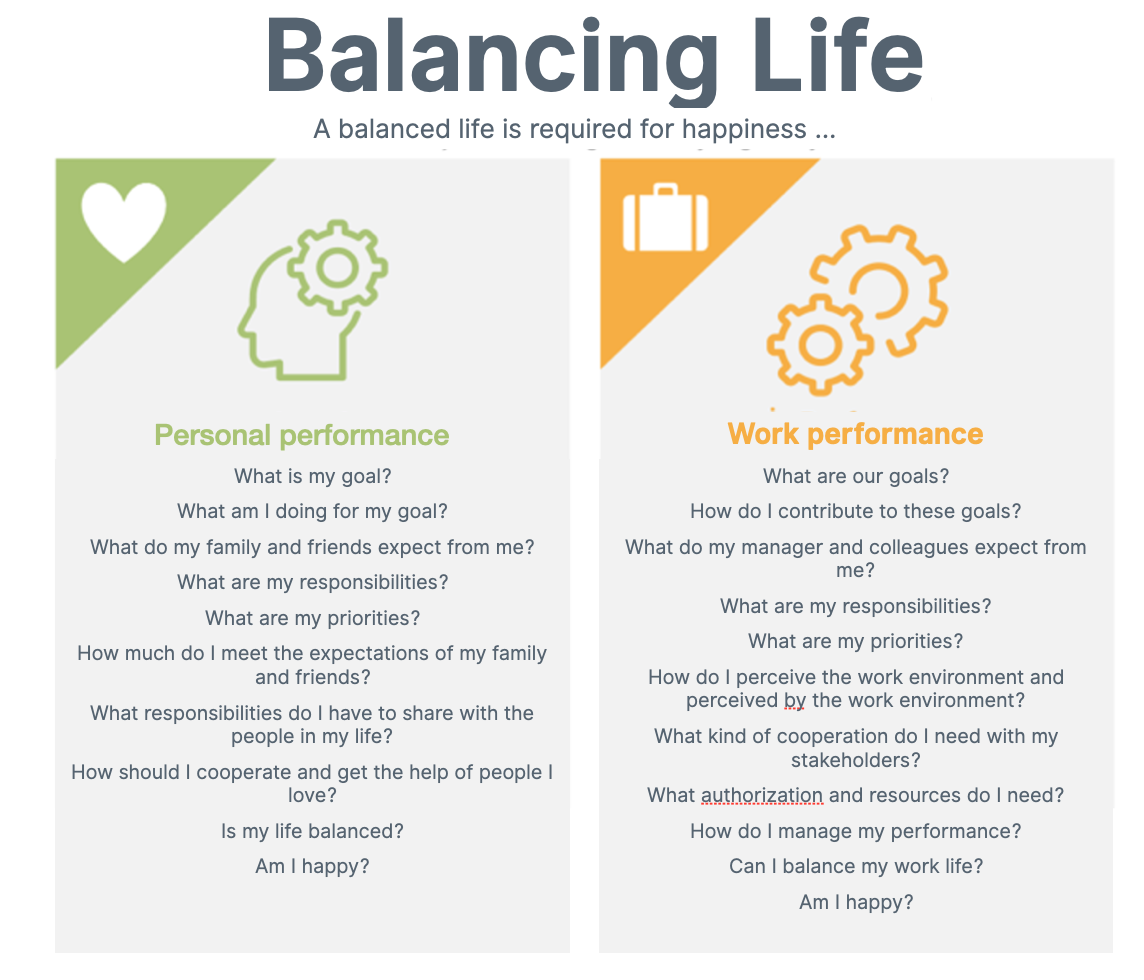
Performance management is all about how each individual chooses to balance their goals with company goals. So it's about balancing our lives. The basis of life balance is the management of time and priorities. Whether at the corporate level or in personal life, we ask the same questions for success.
As the things we need to learn to stay up-to-date increase, our roles differentiate, responsibilities rise, and business and personal goals compete for attention, do the jobs coming your way feel like an avalanche? In Covey's words, managing time and priorities is essential for personal effectiveness — for achieving the "Balance of Your Life."
Focusing on People, Not Just Metrics
If you are designing a corporate performance management process, focus not only on business outcomes but on the personal side too. The answers to personal questions also affect your company's success. Reread the questions, but this time put your people — or yourself — at the center. Try to answer your life by thinking 360 degrees across family, friends, job, and career. There are always people at the center of your company, and giving them tools to succeed in life, not just at work, matters. Individual performance is shaped by the culture people live in.
The indisputable truth: "Happy employee = successful company."
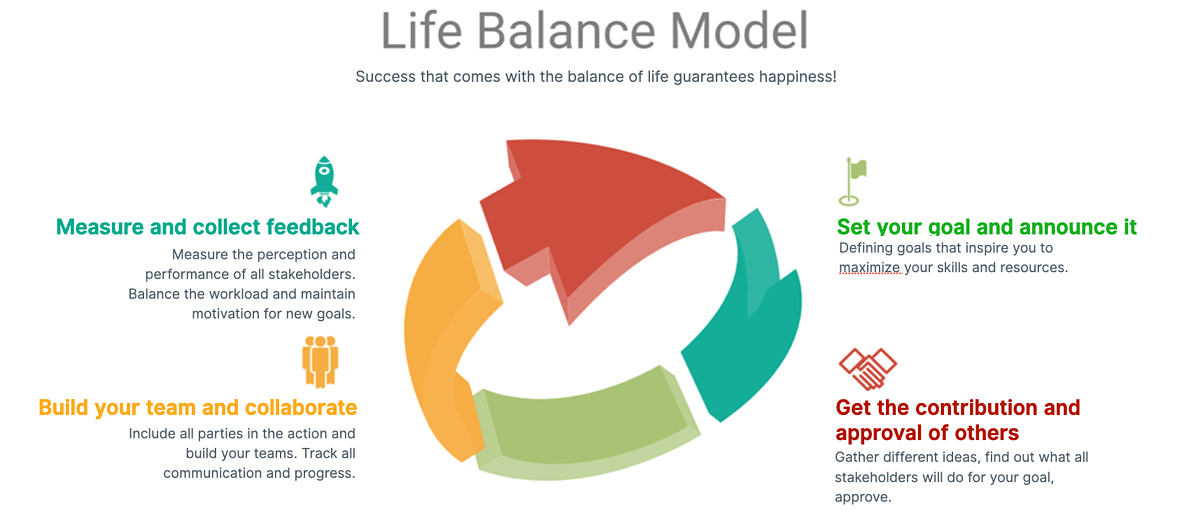
These four steps work when taught to individuals acting together. Ultimately, each team achieves an agreed-upon goal with clear responsibilities. But is there real success — a result achieved on time, with value created along the way, that makes all parties happy? Does the destination you first envisioned match where you actually arrived? Was the length of the path, the obstacles, and the energy, time, and resources spent worth it? This is where the real problem starts. We all focus on setting a goal and reaching it, both personally and professionally.
We all work hard and spend energy, but are the results worth it? If they are, happiness follows.
How do you most effectively use your time, energy, and resources on an uncertain route to your destination?
5 Steps for a Sustainable High-Performance Culture
1. Set Your Goal and Announce It
Imagine the place you want to reach; describing that picture in words is the first step in setting goals.
"Imagine it, picture the details in your mind, and describe your picture."
Whether defining individual or company goals, this is perhaps the most challenging part and should be supported with data, since it guides and guarantees success. Whether you're an individual managing your own life or a CEO responsible for many people, you focus on the same core areas of life.
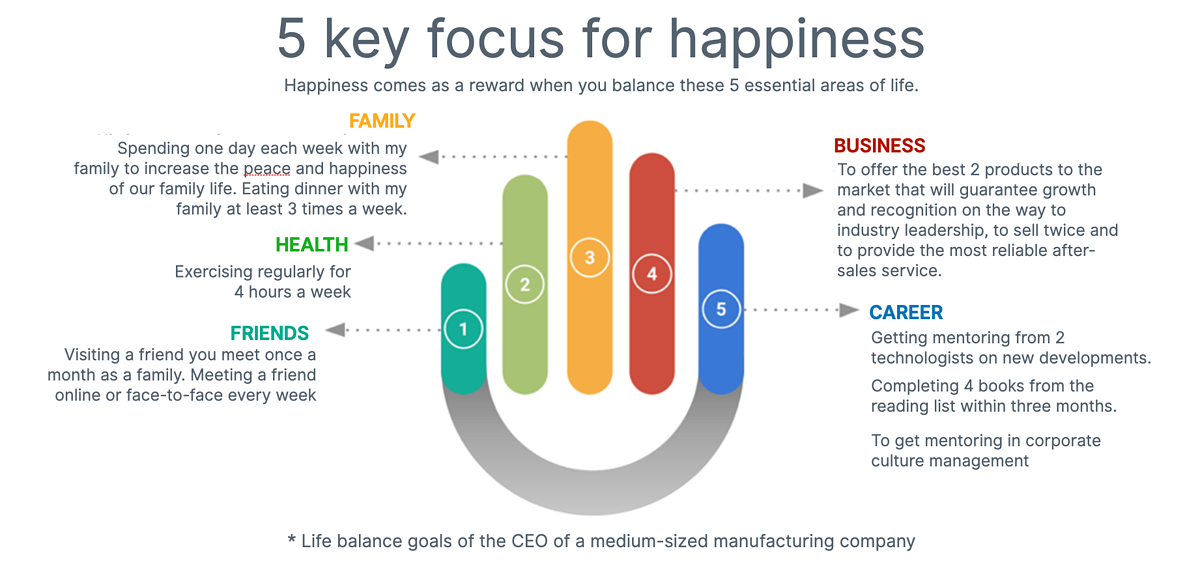
Family, health, work, friends, career: the goals you add to these five basic life areas help you mentally focus on your life balance. It's critical to set the right goal for the right focus. For example, if the goal is a well-run family life, set a goal to maintain that order. Or, if you're struggling to reach business goals, shift time investment toward family. What will your family say about this? What risks increase if you don't use that time correctly?
Step 2 ensures you get support from all stakeholders as you pursue your goal, making it easier for them to show empathy. "Getting the contribution and approval of others" lets you move forward with the least risk and the highest support.
2. Receive Contribution and Approval of Others
You've set your goals. Now let's challenge a mathematical truth: in this chapter, "1 + 1 = 4 or even 6." How? Through synergy.
You create synergy by opening company goals to employees, letting them develop their own contributions, dreams, and projects, and form their teams. By including employees in the process, you help them internalize company goals and turn goal-setting into a natural process with broad participation — laying the building blocks of performance management.
3. Build and Collaborate With Your Team
Individual success matters for employees' self-confidence and motivation. But transforming individual success into team success is far more important and healthier for the organization.
4. Measure and Collect Feedback
You cannot manage what you cannot measure. It's essential to measure both dimensions mentioned earlier: perception and truth. This leads to another necessary realization — goals may change along the way, and every lesson learned from mistakes and analysis should give the courage to update targets, even daily if necessary.
5. Apply the Life Balance Model
As noted earlier, employees must manage business and personal life together. Your ability to see, understand, and support this is critical for earning employee enthusiasm and commitment. It is now an indispensable principle for leaders to target success while also considering employees' health and happiness. Managing fair workload distribution is one of the most critical responsibilities for every manager.
Each of these five dimensions leads to a model you need to think about, measure, plan, and act on — for both company goals and personal life.
If you're curious about the rules and models for setting individual and corporate goals, explore how performance management is evolving beyond traditional reviews.
Frequently Asked Questions
Why is performance management focus changing?
Performance management focus is changing because companies now recognize that employee wellbeing and life balance directly affect business success, not just goal completion.
What are the 5 steps for a sustainable high-performance culture?
The five steps are: set your goal and announce it, receive contribution and approval from others, build and collaborate with your team, measure and collect feedback, and apply the life balance model.
What is the Life Balance Model in performance management?
The Life Balance Model focuses on five key areas — family, health, work, friends, and career — helping individuals and companies set goals that support both personal and professional success.
How does employee happiness relate to company performance?
Happy employees are more engaged and productive, which is why the principle "happy employee equals successful company" is central to modern performance management.
How can managers support this shift in performance management?
Managers can support this shift by involving employees in goal-setting, fostering team collaboration, measuring progress consistently, and ensuring fair workload distribution.
Dilek Mete
20.01.2021
