


What is Employee Engagement & Why It Matters
 Sorwe
Sorwe


Employee engagement is the level of emotional commitment, motivation, and satisfaction an employee feels toward their job and organisation, and it is crucial because disengaged employees can cost a company up to $10,000 each in lost productivity and turnover.
According to PeopleMetrics, that figure represents just one disengaged employee — imagine the impact if you have several. Beyond direct costs, disengagement risks lower productivity, wasted management time on turnover, and a culture no one enjoys working in. This makes employee engagement a critical priority, not something to ignore.
Contents
- What is employee engagement?
- Which areas should you focus on?
- How can you measure engagement?
- How can you improve employee engagement?
- How to create an engagement culture?
What is employee engagement?
There is no single fixed definition of employee engagement, but it is closely linked to employee satisfaction and mindset. An employee's attitude toward their job and company is shaped by motivation, workplace conditions, and culture — all of which can change over time. While you can't directly change someone's mindset, you can influence it by providing the best possible environment and addressing key work areas.
The more engaged your workforce, the better their productivity and customer service, typically alongside lower turnover and reduced hiring and training costs. However, true engagement goes beyond a happy workforce: employees need to be genuinely invested in the company's success and understand its goals and their contribution to them.
This is why measuring employee engagement matters. Without measurement, you have no way of knowing current engagement levels or what needs to improve.
Which areas should you focus on?
In 2009, Engaging for Success (the MacLeod Report) studied UK organisations with high employee engagement and performance. It concluded there is no "one size fits all" approach, but identified four key engagement enablers:
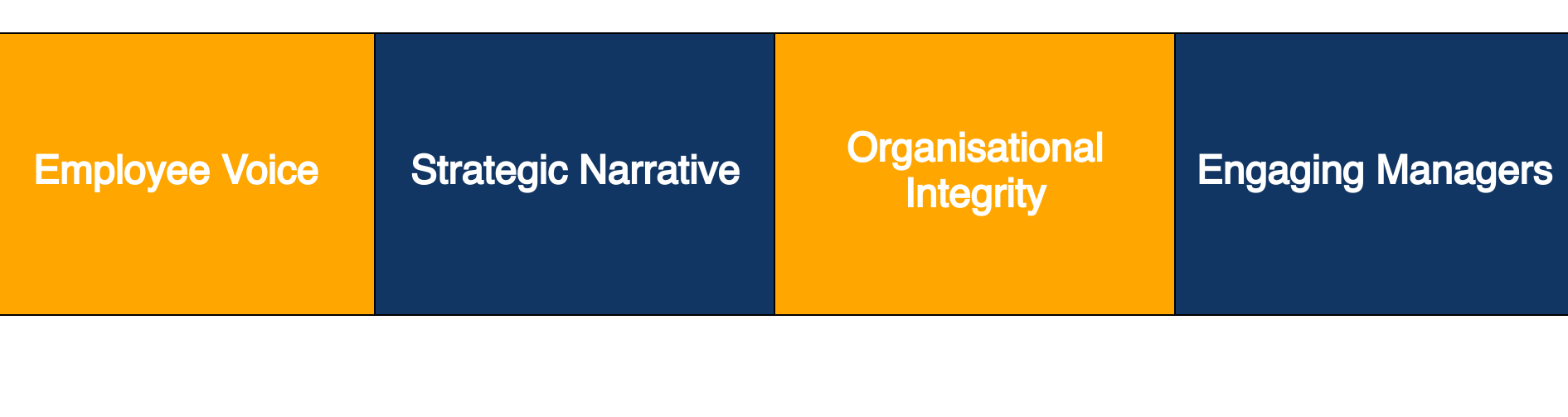
- Employee voice — employee opinions matter, and employees should be asked for feedback, listened to, and able to share ideas and experiences.
- Strategic narrative — leaders should be visible and empowering, providing a strong strategic narrative about the company's direction.
- Organisational integrity — promises made to employees must be kept, or explained if not. Daily behaviour across the company should reflect stated values.
- Engaging managers — managers should focus on their people, coach and stretch them, and treat them as individuals.
How can you measure engagement?
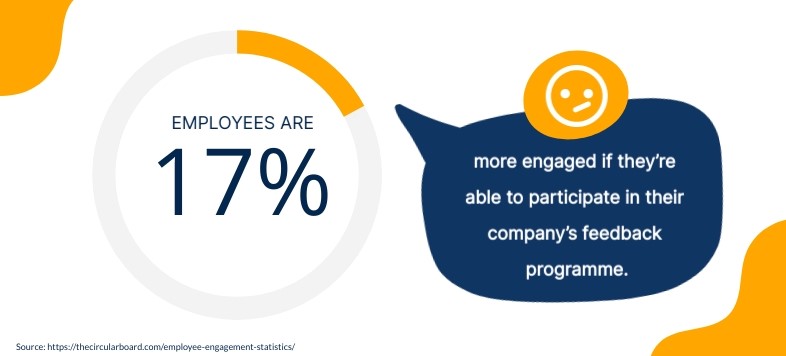
There are various ways to measure engagement, but the most important thing is that your company actually does it. Take time to consider your options and plan carefully to ensure you're measuring the right areas, at regular intervals. Data suggests employees who participate in a regular feedback programme are up to 17% more engaged.
Consider these feedback options:
Employee engagement surveys — whether run in-house or via software and external providers, surveys are a great way to assess engagement, covering job satisfaction, communication, culture, and more across the employee life cycle.
Pulse surveys — carried out more frequently than full engagement surveys, often to gauge feedback on specific teams or after organisational change. Pulse surveys are quicker and easier to administer, giving an immediate snapshot of engagement levels.
Management meetings — managers can gather feedback directly from their teams. This works well for quick input, but employees with concerns about their manager or team may not answer as honestly in an open setting.
How can you improve employee engagement?
According to Gallup's 2021 survey of engagement in the US, only 34% of employees were engaged and 16% were actively disengaged — the first decline in engagement in a decade. Yet the challenge to improve it remains as important as ever.
Many companies still showed increased engagement, and Gallup attributes this to getting fundamentals right: communication, senior management involvement, and accountability.

You need feedback from your people first to understand real issues and concerns. Without it, you're only guessing at problems and solutions. Once surveys are complete, you can create action plans and set improvements in motion.
How to create an engagement culture?
Ideally, you want a culture where engagement stays consistently high without constant measurement. Here are key strategies to build engagement, commitment, and motivation:
Performance Management
Performance management is essential to workplace culture. an effective performance management strategy develops your people and builds a high-performance culture by aligning individual performance with business goals. Engagement rises when employees experience clear, communicated performance measurement and regularly reviewed goals.
Not every manager follows a structured performance cycle, and not every company sets clear objectives. But a well-planned, continuous performance management cycle brings transparency — employees should know exactly what to do and how they contribute to the team and company, boosting engagement.
Training and Development
As part of the performance cycle, every employee should be able to discuss training needs and development. Managers may suggest areas for growth, but employees should also have a say in what they want to develop. Once agreed, training must actually happen — employees should feel some choice and stay motivated throughout.
Research shows that training and development can improve employee engagement by boosting job satisfaction, pride, advocacy, retention, and organisational commitment. Leaders must discuss training during performance reviews and follow through when agreed. Digital training platforms can support this, and processes should be well planned and regularly reviewed.
Internal Communication
Communication is essential for a high-performing workforce. Employees need to know company goals and strategy, and stay updated on changes and achievements. Senior leaders should hold regular staff meetings accessible to everyone regardless of location, so messages come directly from leadership rather than through rumours.
Every company has its own internal communication channels, including intranets, newsletters, emails, and management meetings. Open, regular communication builds shared purpose, trust, and inclusion.
Feedback Culture
Feedback should be a two-way process within every organisation. Too often it flows only from managers to employees during formal appraisals. Building a culture of regular, company-wide feedback — including 360 degree and continuous feedback — drives more learning, development, and awareness.
The Bottom Line
Your company should implement a strategy for giving and receiving regular feedback at all levels, using feedback tools appropriate for your company. Over time, an open feedback culture enhances employee engagement.
Employee engagement is crucial to your business's success, but it can't change overnight. Measure it first to understand current levels and priority areas — don't try to fix everything at once. Focus on the most significant areas, ensure every team receives feedback and action plans, and build a culture of regular, cross-level feedback and open communication. It takes time and buy-in, but when employees know their input is valued, engagement improves.
Sorwe provides the tools you need to assess, evaluate, and improve your employees' engagement. Get in touch to learn how Sorwe solutions can help you improve your employee engagement practices.
Frequently Asked Questions
What is employee engagement?
Employee engagement is an employee's emotional commitment and motivation towards their job and company, shaped by workplace culture, conditions, and leadership.
Why is employee engagement crucial?
Disengaged employees can cost companies thousands of dollars each through lost productivity, poor customer service, and higher turnover, making engagement vital for business success.
How can you measure employee engagement?
You can measure engagement through employee engagement surveys, pulse surveys, and regular management meetings, ideally conducted at consistent intervals.
How can you improve employee engagement?
Improve engagement by gathering employee feedback, creating action plans, strengthening performance management, offering training, and maintaining open internal communication.
What are the four engagement enablers from the MacLeod Report?
The four enablers are employee voice, strategic narrative, organisational integrity, and engaging managers.
